
RESOURCES
BLOG
Join in the community forum! The thINK blog is a place for community members to share their opinions, best practices, successes, and challenges. Add your comments to the blogs published here or write a blog and we’ll post it for you.
The Preference for Print Varies by Application
Every other year, the industry organization Two Sides NA produces a global Trend Tracker that delves into consumers’ perceptions about print, paper, and paper-based packaging. Published earlier this year, the latest iteration of this survey includes responses (via online surveys) from 12,400 consumers across seventeen countries including the United States and Canada. An October press release by Two Sides entitled New Global Survey Reveals Consumers Want the Choice for Paper Over Digital Communications shares some results on global consumer attitudes toward paper-based and digital communications. A four-page summary of the report is available free of charge via the Two Sides NA website.
Concerns about Digital
The survey findings show “growing concern among consumers regarding issues such as data security, digital fatigue, and the potential health risks associated with excessive screen use.” To this point:
- 65% of the study’s respondents worry that their personal information (when held in digital form) is vulnerable to hacking, theft, or loss.
- 54% feel they spend too much time on their digital devices.
- 48% are concerned about potential health impacts from excessive screen time.
The study’s authors also warn that despite the widespread assumption that digital communications are more environmentally friendly, it is becoming increasingly clear in these days of artificial intelligence (AI) that the environmental footprint of our global digital infrastructure is already immense and will continue to grow. The power requirements for AI alone are staggering.
Consumer Preferences for Print
One of the most interesting sets of data points from the Two Sides study relates to consumers’ preferences for different types of print. Two Sides has been tracking this data since 2021 for the following six application sets:
- Newspapers/news
- Magazines
- Books
- Product catalogs
- Bills & statements
- Federal, State, and local tax statements
The top-ranked application in 2025 is books (at 53%), which leads the last-placed newspaper/news (27%) by a large margin.
Figure 1: Share U.S. Consumers Who Prefer to Read in Print
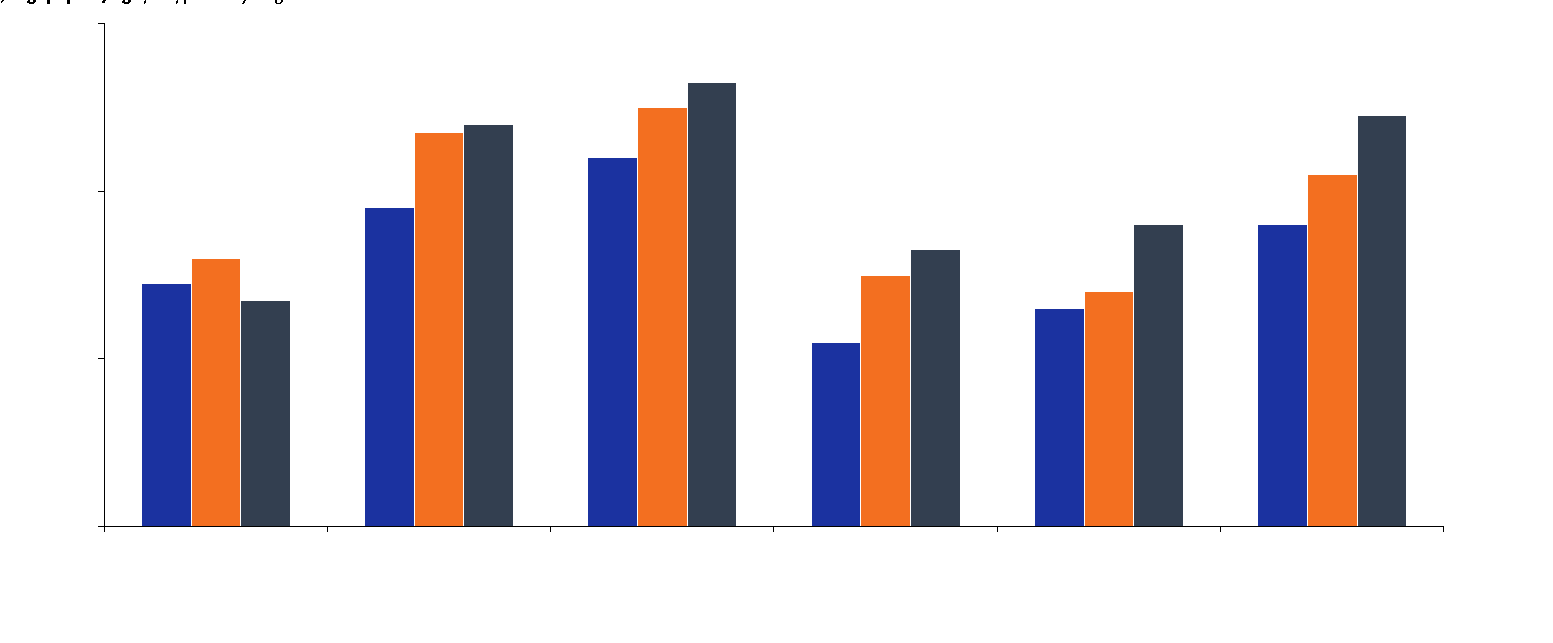
Clearly, the preference for print varies widely based on the type of communication. There are several reasons for this:
- Content longevity: The content in most books is intended to last for a very long time. Newspapers, and to some extent magazines, contain content that ages quickly. It is therefore not too surprising that some magazines put out special issues whose topics are likely to be of interest for a longer time. These are sometimes referred to as “bookazines.”
- Cost-effectiveness of physical delivery channels: Newspapers are struggling today for many reasons, but the economic complications related to delivering hard copy newspapers to customers will ultimately be the end of them. In contrast, digital delivery of news can happen instantaneously. Books, on the other hand, are readily available in physical form from libraries and bookstores. They can also be ordered online and delivered very quickly.
- Trust: Consumers trust print for applications like bills & statements or tax documents. It provides them with a physical record. Going completely digital also raises privacy concerns for some consumers.
- The physical nature of print: Print can be consumed at leisure without requiring users to look at their phones or computer screens. For those consumers who feel overwhelmed by our digital-first world, this is an important factor. This holds true for leisure reading as well as financial documents. Print in the mail also serves as a physical reminder of a due bill or some other document that requires action. Although they scored nearly as low as newspapers in the Two Sides study, catalogs can also serve as a physical reminder that may lead to an online or in-store purchase.
- The nature of analog reading: There are certain advantages to reading books in print as opposed to viewing the same content on a tablet or e-reader. There is the tactile aspect of book-reading, which involves holding a book in one’s hand and turning the pages. There is the distance a book creates from the disruptions that may appear via digital media. Studies have also shown that comprehension can be higher with printed media.
Conclusion
Research such as that contained in the Two Sides Trend Tracker report highlight valid consumer concerns about digital replacements for print applications. These are relevant for print service providers as they consider how best to meet their customers’ needs in terms of user preferences, content requirements, economic factors, consumer trust, and familiarity and/or comfort with digital delivery methods.
Author bio: Jim Hamilton of Green Harbor Publications (www.greenharbor.com) is an industry analyst, market researcher, writer, and public speaker. For many years he was Group Director in charge of Keypoint Intelligence’s (formerly InfoTrends’) Production Digital Printing & Publishing consulting services. He has a BA in German from Amherst College and a Master’s in Printing Technology from the Rochester Institute of Technology.